Singapore · Established 2022
Antibodies, proteins, and the assays that qualify them.
A Singapore contract research laboratory. Bring us a full discovery campaign or a single experiment — both are normal here.
What we run in-house
Start Here
Antibody Discovery
Five discovery routes under one roof, so the platform is chosen to fit your antigen rather than to fit what we happen to own. We advise on that choice before you commit budget, and can switch strategy mid-campaign without you switching vendors.
The five routes
| Transgenic mouse | Fully human antibodies from humanized Igh and Igk loci, in vivo affinity matured. No humanization step, so no added cost or timeline. Deliverable: sequence-confirmed fully human hits with binding data. |
|---|---|
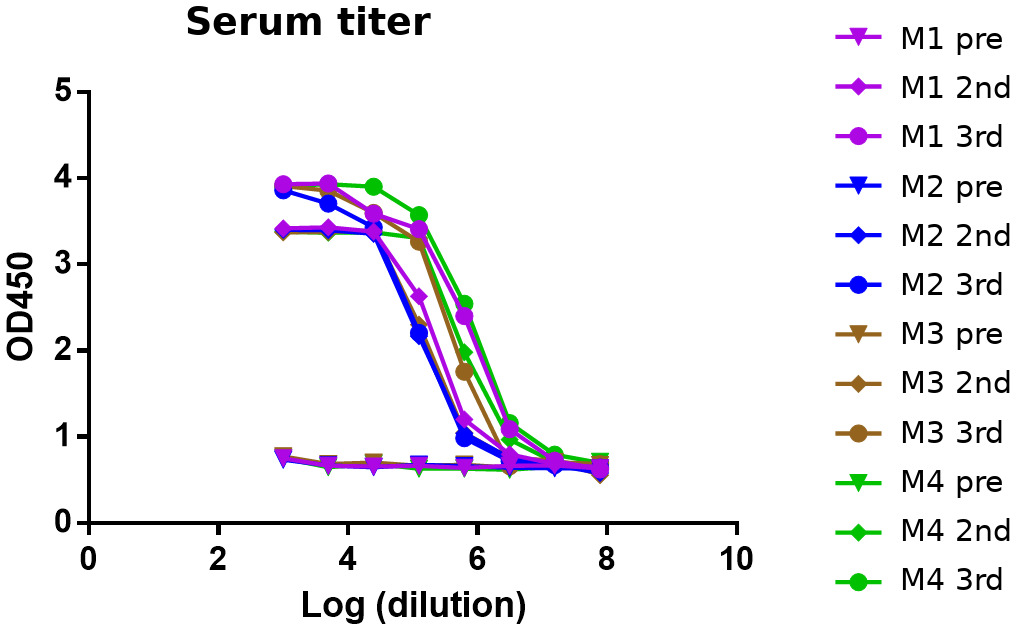
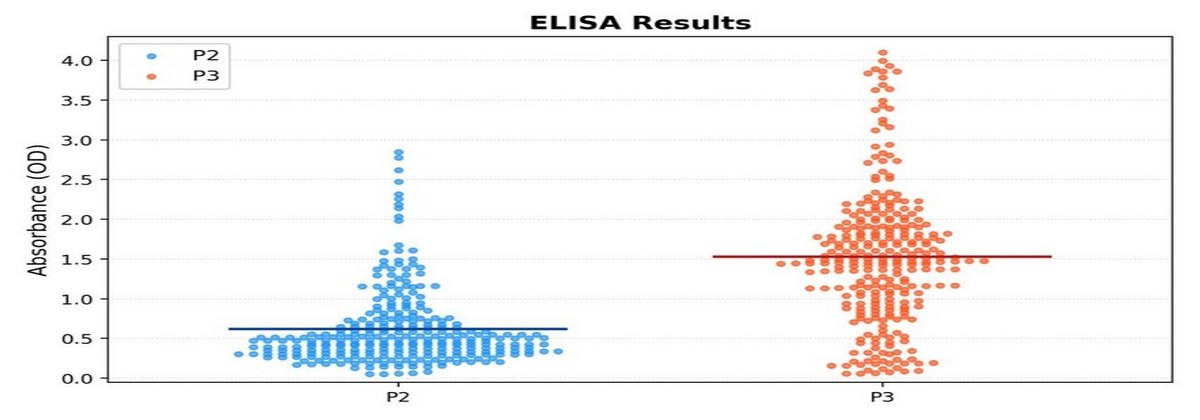
| Hybridoma | Four mice, three bleeds, around 1,000 clones screened by ELISA. Roughly 70% of clones give OD450 above twice background, with sequence clarity above 95%. Deliverable: confirmed clones, sequences, preliminary binding data. |
| Single-B cell cloning | FACS-sorted single cells with paired VH/VL amplification, preserving native pairing and avoiding the clone loss inherent to fusion. Deliverable: paired sequences and expressed recombinant hits. |
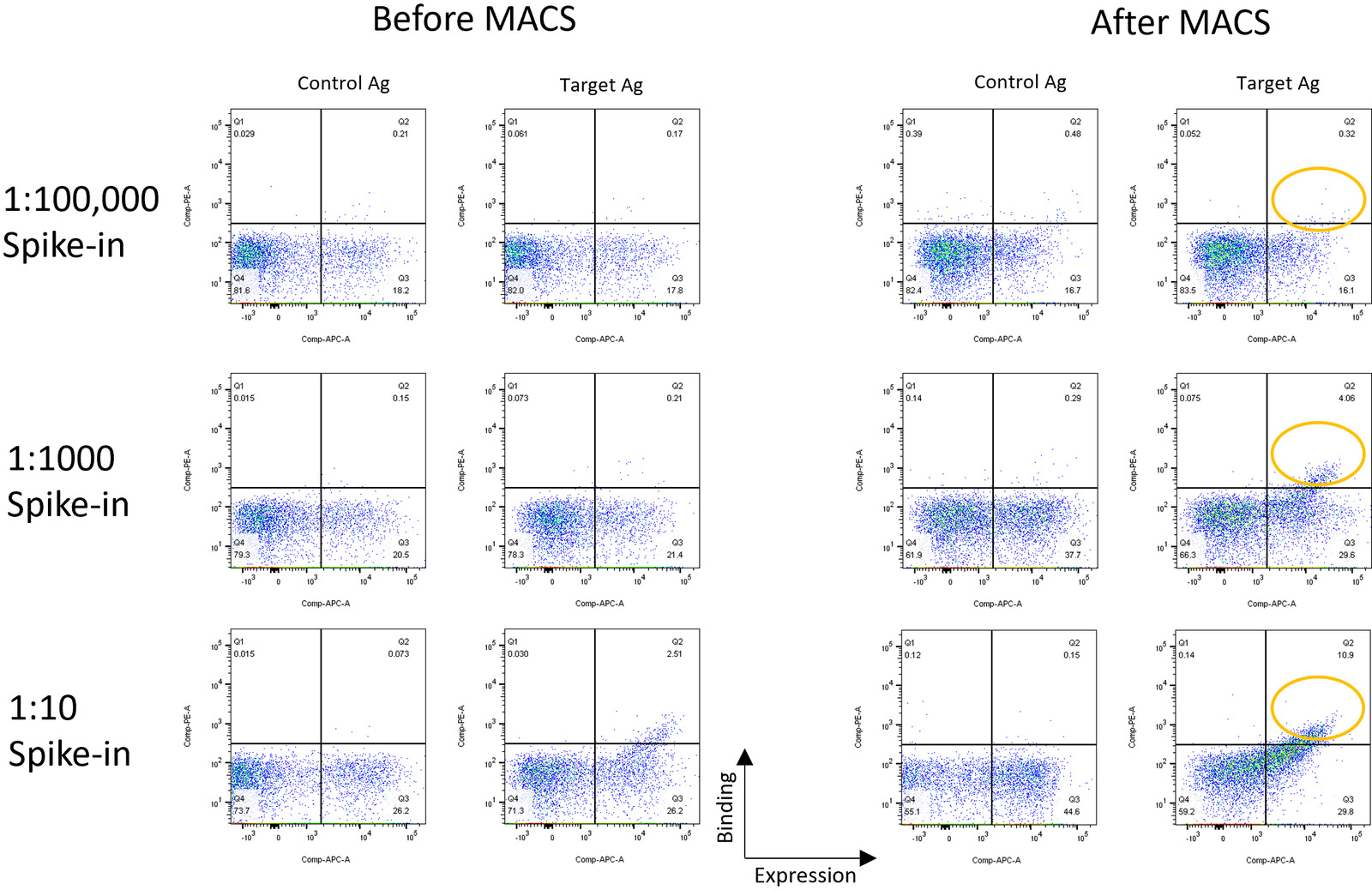
| Yeast display | Validated to 1:100,000 spike-in sensitivity across three dilution ratios. Also the route for affinity maturation and developability selection. Deliverable: ranked binder sequences with affinity data. |
| Phage display | Custom scFv, Fab and VHH libraries for targets that defeat immunization — GPCRs, ion channels, haptens, conformational epitopes. Deliverable: hit sequences with phage ELISA binding data. |
Representative data
Antibody Engineering & AI
A binder is a starting point, not a molecule. Engineering is the work of turning one into something that can be made, formulated and used — with computational modeling deciding what deserves bench time.
What we engineer
| Affinity maturation | Error-prone PCR library from the parent clone, MACS enrichment, FACS sorting for the highest-affinity variants. One pharma campaign produced variants above a ten-fold affinity increase in eight weeks. |
|---|---|
| Humanization | Framework selection, back-mutation design and immunogenicity risk assessment, computationally guided. Antibodies from our transgenic mouse platform are already fully human and skip this step entirely. |
| Developability | Stability, expression, aggregation behavior and solubility, addressed early rather than discovered late. Yeast display allows selection for stability and expression before a lead is committed to. |
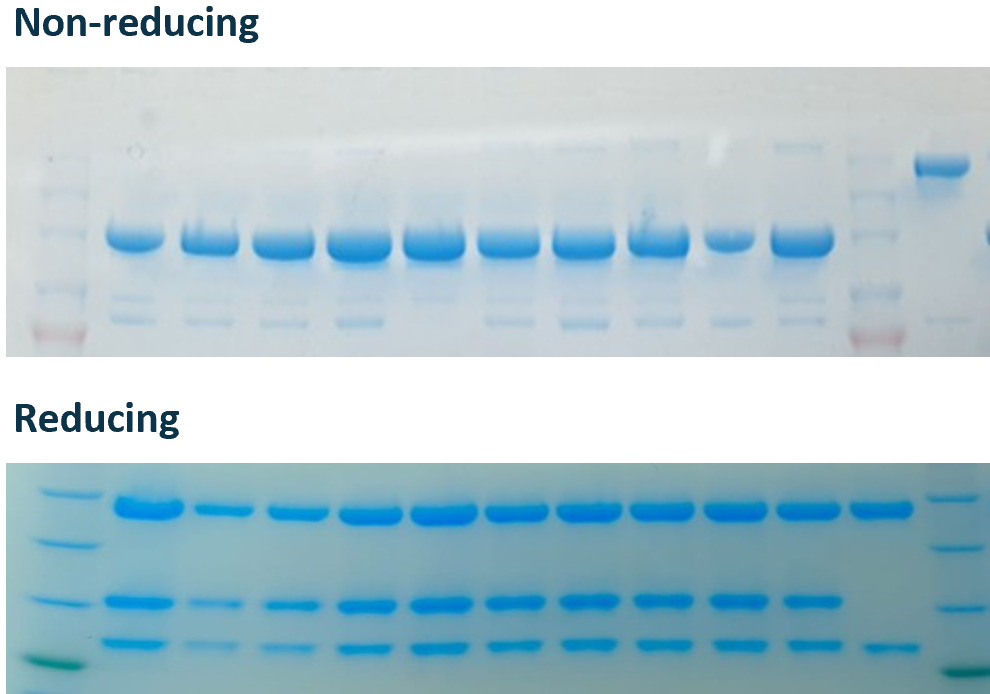
| Format engineering | Conversion between IgG, Fab, scFv and VHH. Bispecific construction including knob-in-hole, confirmed by reducing and non-reducing SDS-PAGE. |
| Common light chain | For bispecific programs needing a shared light chain — described below. |
Common light chain bispecifics
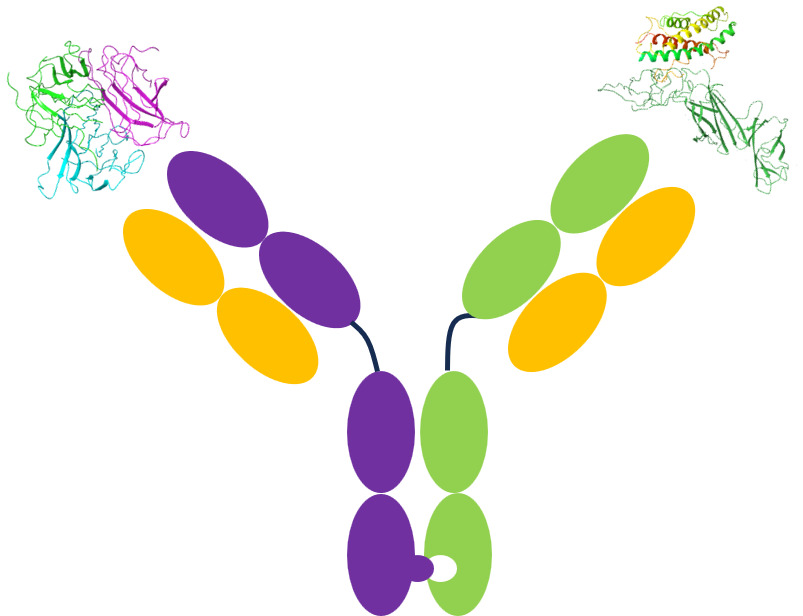
Pairing two different heavy chains with two different light chains creates a combinatorial assembly problem — most of what you make is not the molecule you wanted. Forcing both arms to share one light chain removes that problem entirely. Our route starts from a light chain you already have, pairs it with an immune library against the second target, and screens for heavy chains that work with it.
Functional validation
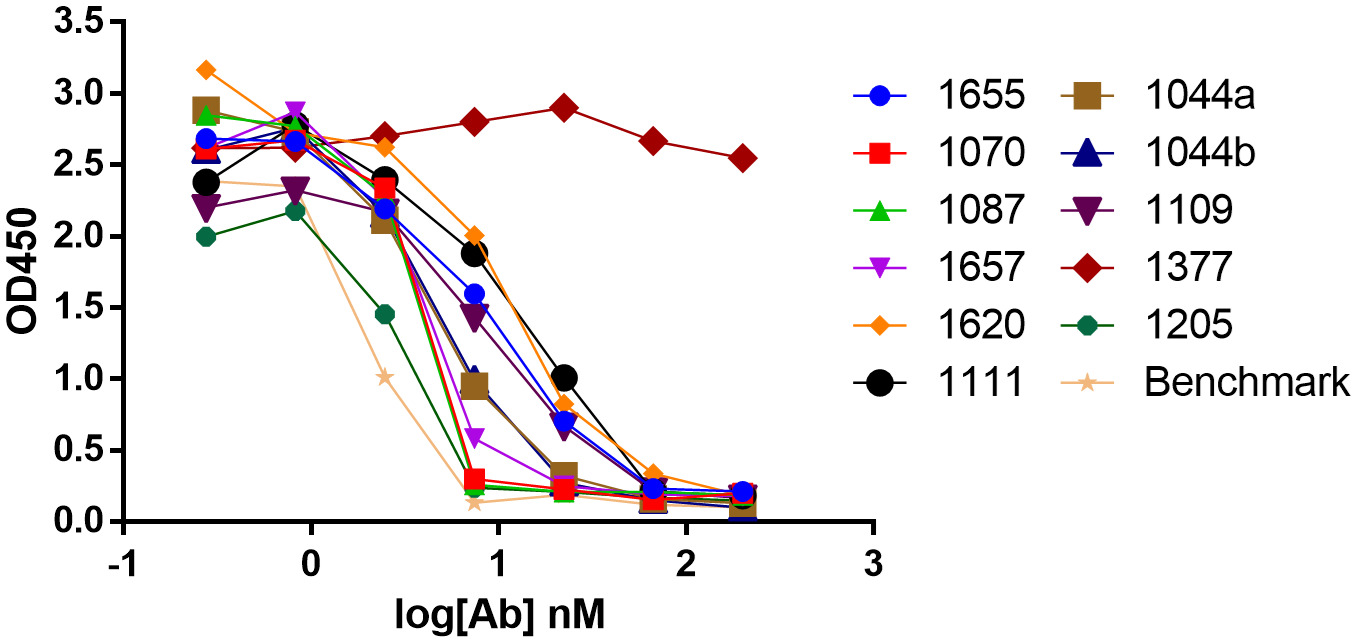
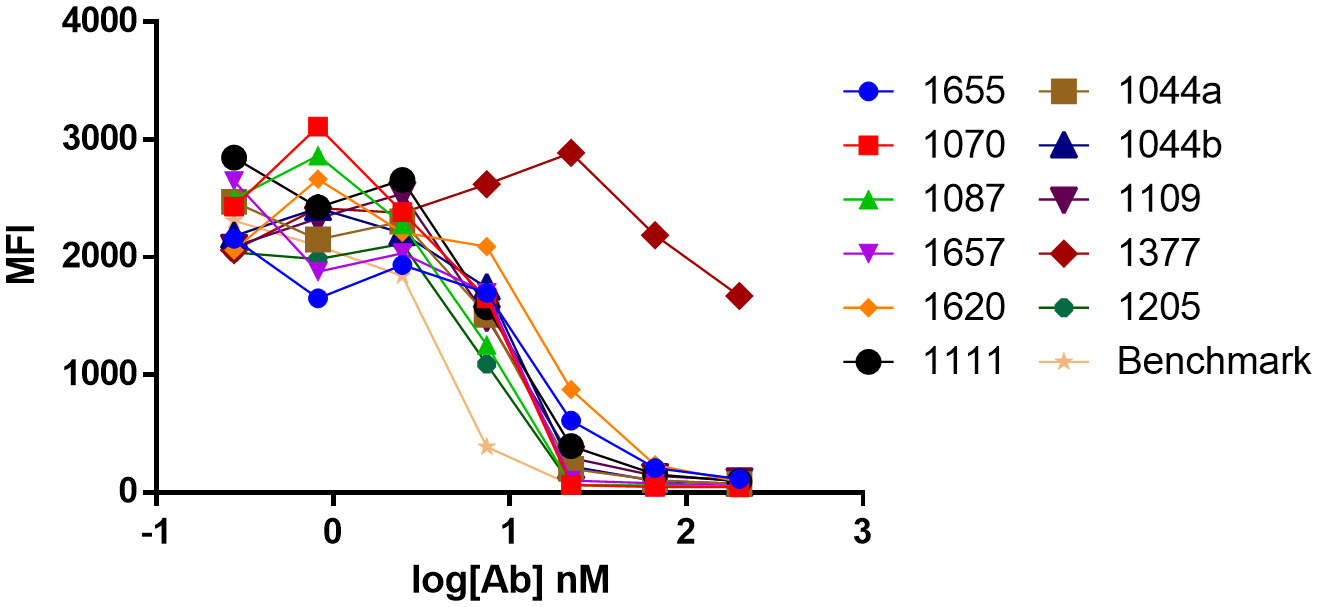
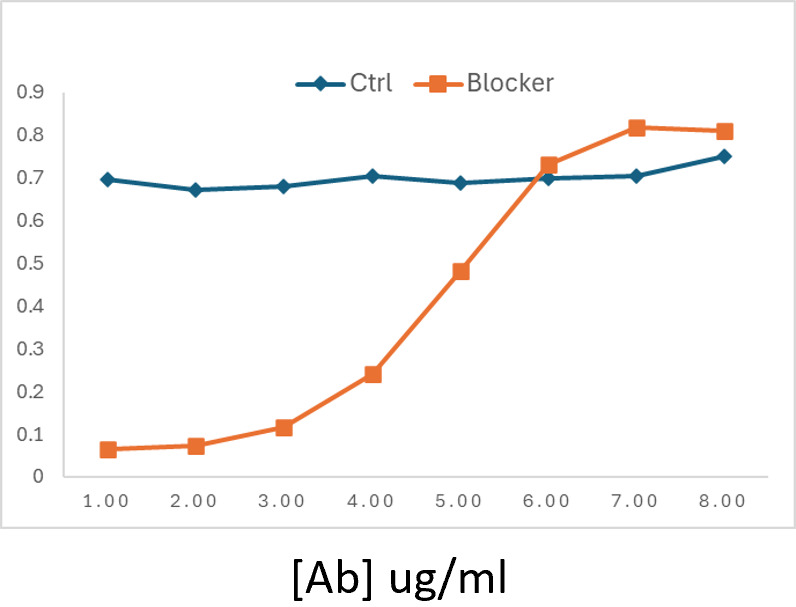
Recombinant clones from a common light chain campaign, assayed for blocking activity alongside a clinical-stage benchmark antibody.
Where computation fits
| AI-assisted humanization | Framework selection, back-mutation prediction and immunogenicity risk scoring computed across candidate designs, so the variants that reach expression are the ones most likely to retain affinity while losing non-human content. |
|---|---|
| Developability prediction | Sequences screened in silico for aggregation propensity, solubility, expression risk and chemical liabilities — deamidation, oxidation, isomerization motifs — before anything is made. A liability in a CDR is far cheaper to find here than after a stability study. |
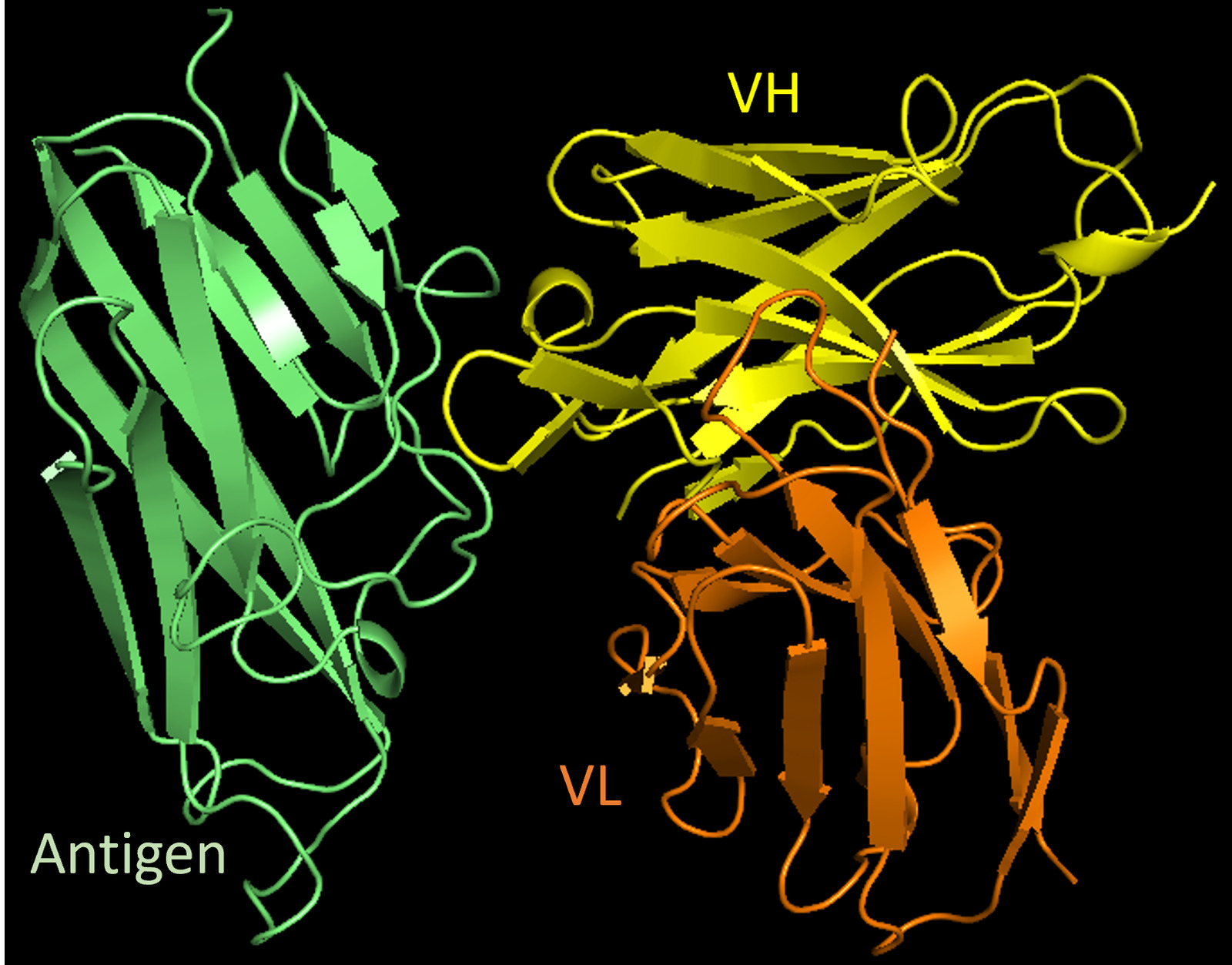
| Structure & epitope modeling | Predicted antibody and antigen structures, antibody–antigen docking, and in silico epitope analysis to guide binning strategy, inform engineering decisions and rationalize experimental results. |
Protein & Antibody Production
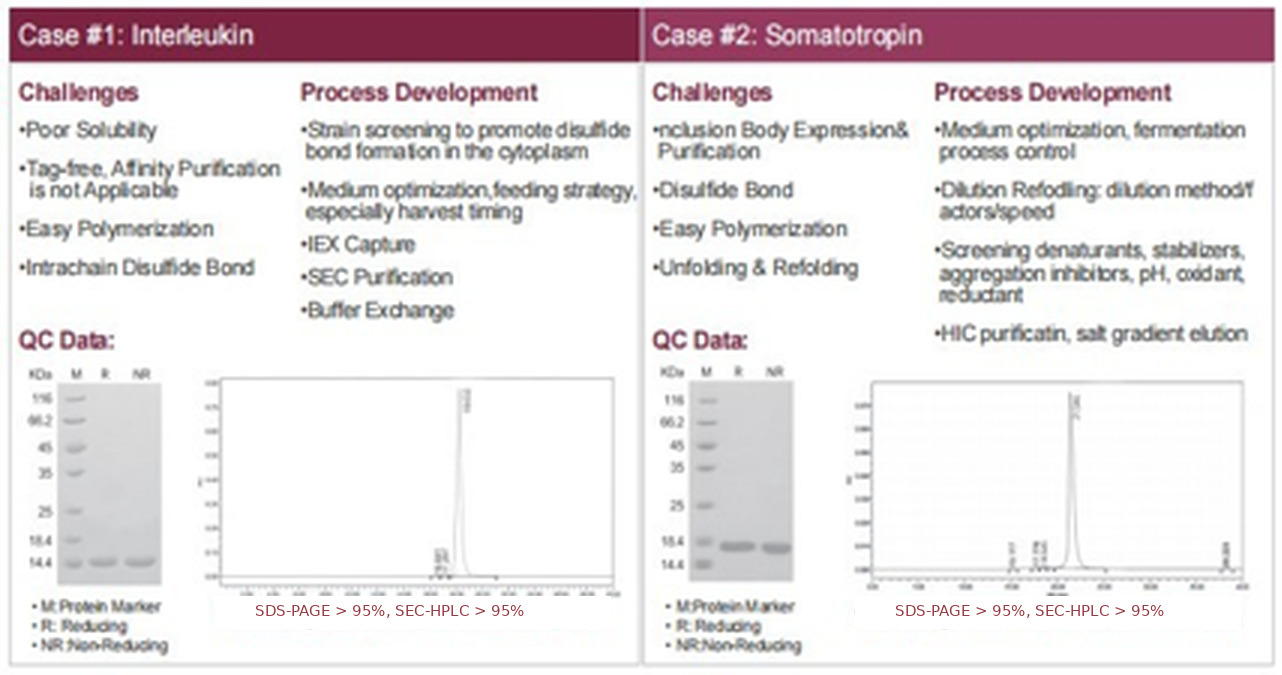
Sequence in, characterized protein out. Four expression systems in-house, including for the constructs that have already defeated one attempt elsewhere — poor solubility, inclusion bodies, awkward disulfide bonds.
FastAb antibody route
For antibodies, sequence to purified protein in as fast as two weeks.
What we produce
| Antibodies | Full-length IgG, Fab, scFv, VHH, and bispecific formats including knob-in-hole. |
|---|---|
| Antigens | Recombinant antigens for immunization, screening and assay development. |
| Other proteins | Cytokines, growth factors, Fc fusions, enzymes. |
| Difficult constructs | Poor solubility, inclusion bodies, intrachain disulfides, polymerization-prone proteins. |
| Cell lines | Stable production lines, plus antigen-expressing and reporter lines. |
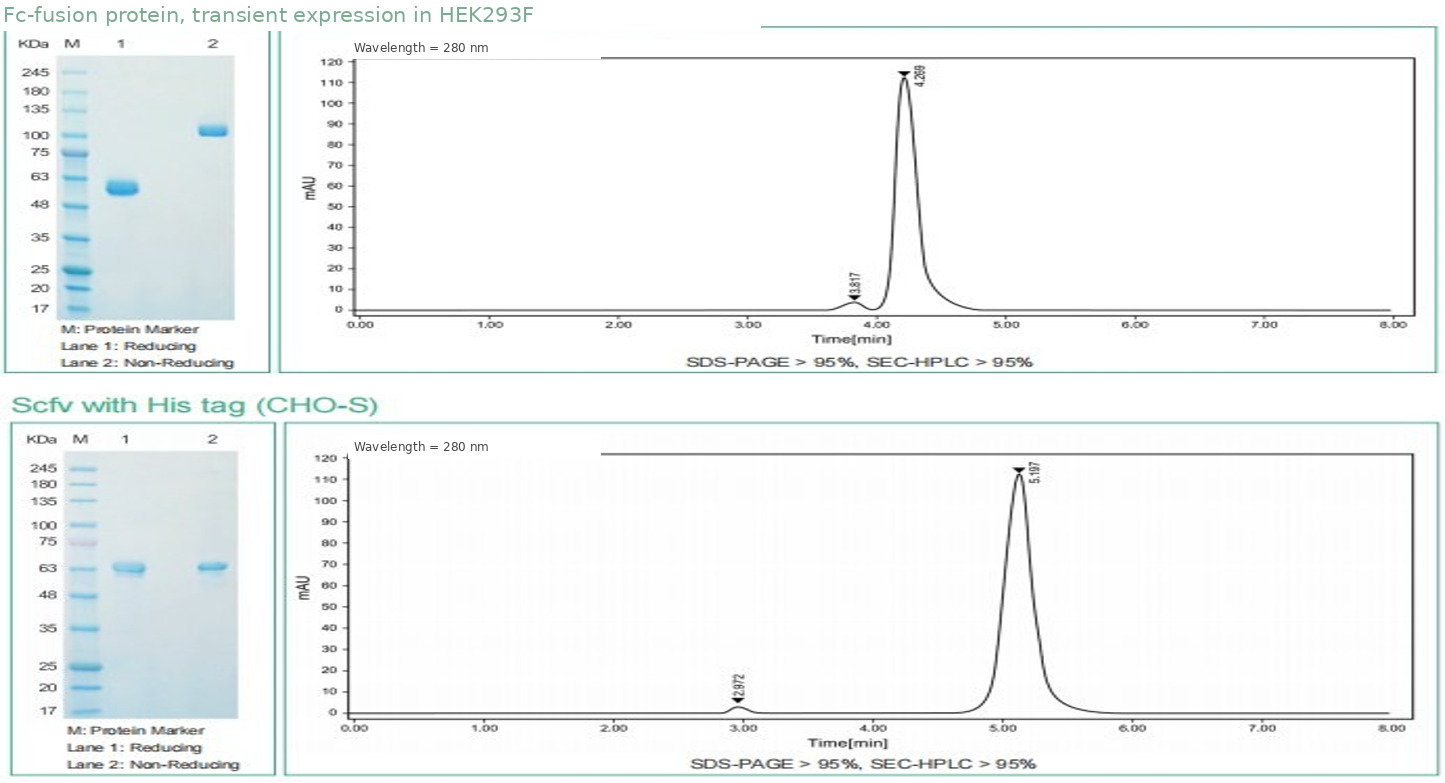
| QC included | SDS-PAGE reducing and non-reducing, SEC-HPLC, yield and concentration. |
Choosing a system
Mammalian systems (HEK293F, CHO-S) suit glycosylated proteins, antibodies and Fc fusions. Bacterial expression is economical for non-glycosylated proteins and scales aggressively, at the cost of a refolding problem when the product lands in inclusion bodies. Yeast and insect cover the middle ground. This is where most expression projects are won or lost, and we would rather discuss it before you commit budget.
Characterization
Everything needed to describe a molecule properly: how tightly and how fast it binds, where on the antigen it binds, whether it is stable and monomeric, and what it is made of. Bought as a package or as a single assay.
What we run
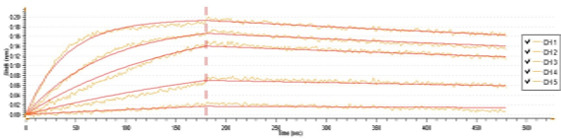
| Binding kinetics | Label-free BLI on Gator. KD, kon and koff in 96-well format, so screening a panel is as practical as testing a single candidate. |
|---|---|
| Epitope binning | Competition binning by BLI to sort a panel into epitope groups — the assay behind diagnostic pair selection and behind knowing whether two leads are genuinely different. |
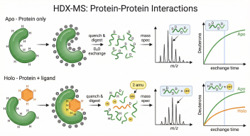
| Structural analysis | HDX-MS for high-resolution epitope identification and conformational analysis. |
| Thermostability | MicroCal. Melting temperature and unfolding behavior, for developability assessment and formulation decisions. |
| Purity & aggregation | SEC-HPLC. Monomer content with aggregate and fragment quantification. |
| Identity & integrity | SDS-PAGE under reducing and non-reducing conditions, and Western blot. |
| Cross-reactivity | Species cross-reactivity panels and specificity checks against related family members. |
What the output looks like
Functional Evaluation
Binding is necessary but not sufficient. These are the assays that establish whether a molecule does the thing you need it to do — in cells and in animals — along with the engineered cell lines those assays depend on.
Assays and systems
| Cell-surface binding | Flow cytometry against antigen-expressing lines, with parental controls. Confirms recognition in a native membrane context, not only as recombinant protein on a sensor tip. |
|---|---|
| Receptor blocking | Dose-response blocking assays with positive and negative controls. |
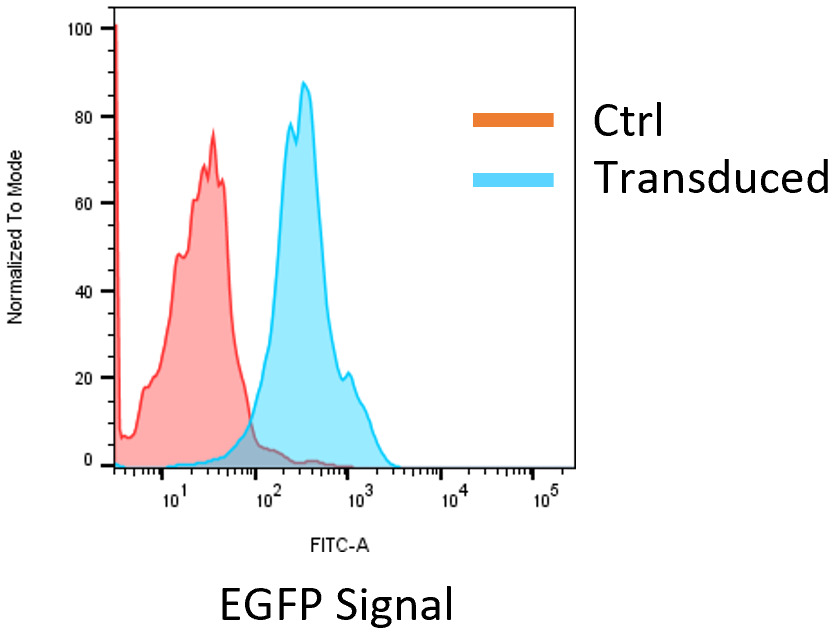
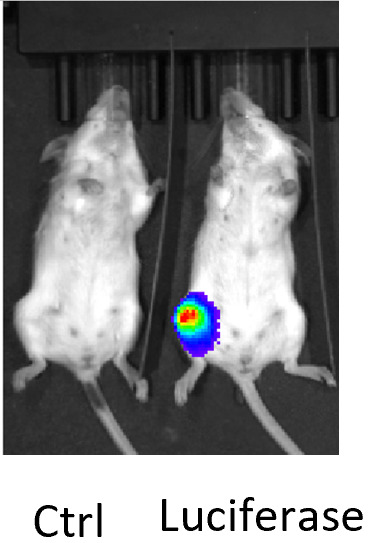
| Reporter assays | GFP and luciferase systems, giving a quantitative dose-dependent readout. |
| Cytotoxicity | Cell viability and killing assays. |
| In vivo | Xenograft tumor models with bioluminescence imaging, so tumor burden is followed longitudinally in the same animal rather than inferred at endpoint. |
| PK/PD | Pharmacokinetic and pharmacodynamic studies run in-house, with bioanalysis and modeling to link exposure to effect. Run alongside efficacy work in the same model where the design allows. |
| Cell line engineering | Retroviral and lentiviral systems. Stable antigen overexpression, GFP and luciferase reporter lines, and screening lines built to spec. Regularly bought on its own by groups running their own downstream assays. |
What the readouts look like
Tell us what you need run
A single assay, a protein batch, or a full discovery campaign. We will tell you honestly whether we are the right lab for it.
Request a quotation